
Last updated November 15, 2026
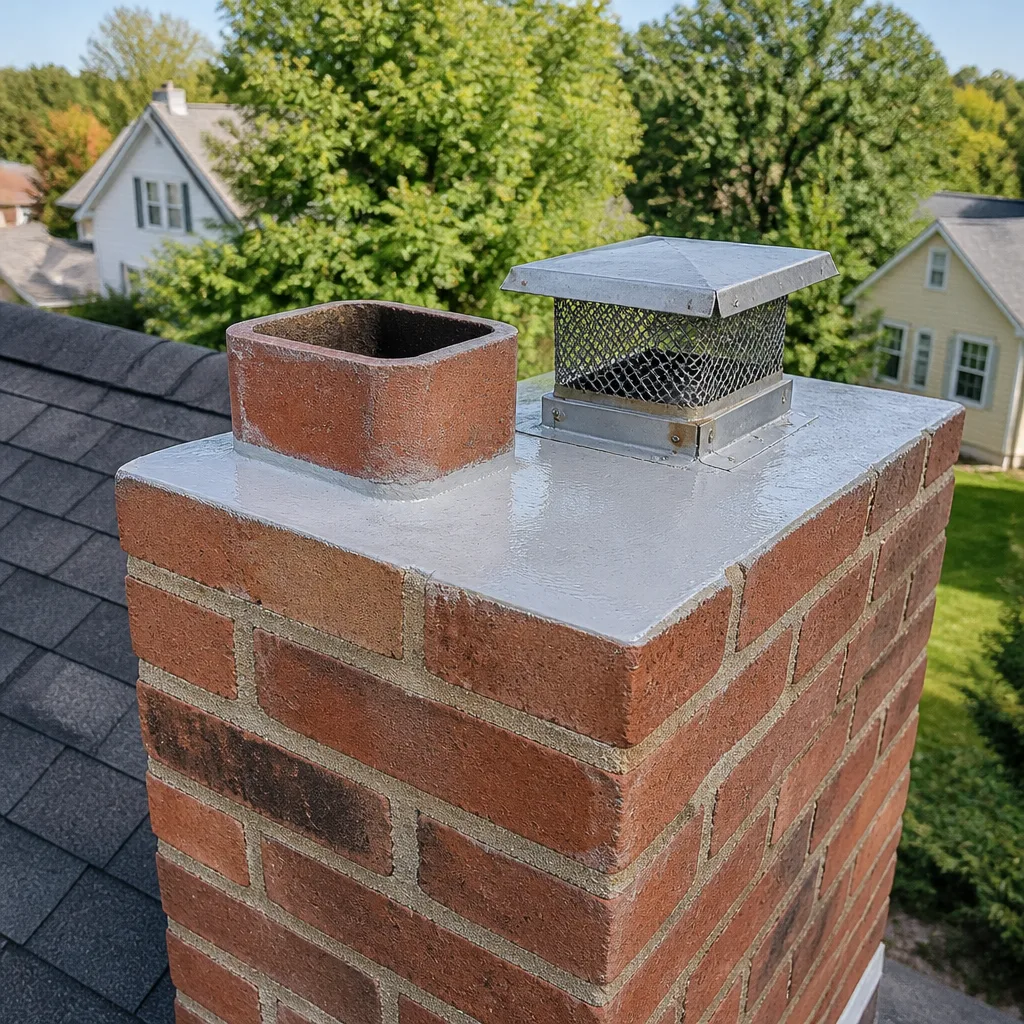 Sweep & inspection
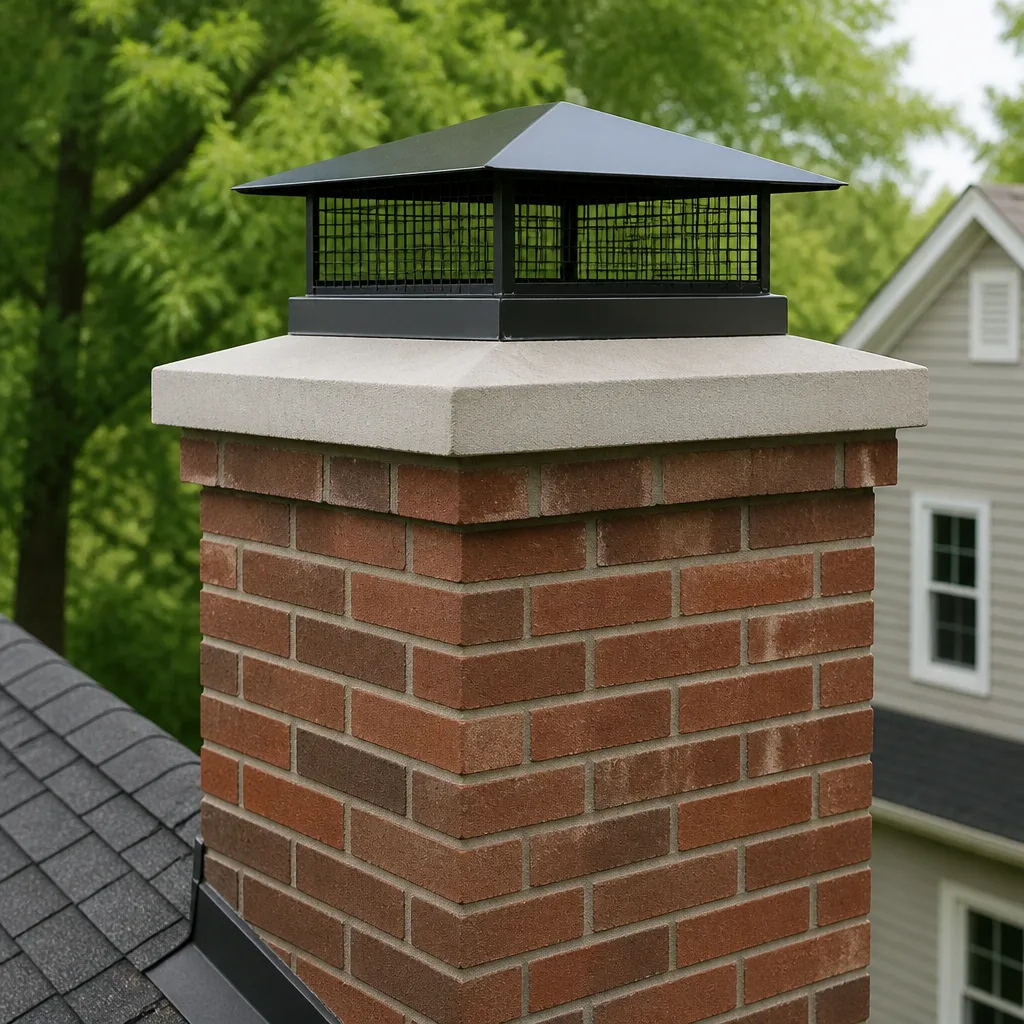 Caps & crowns
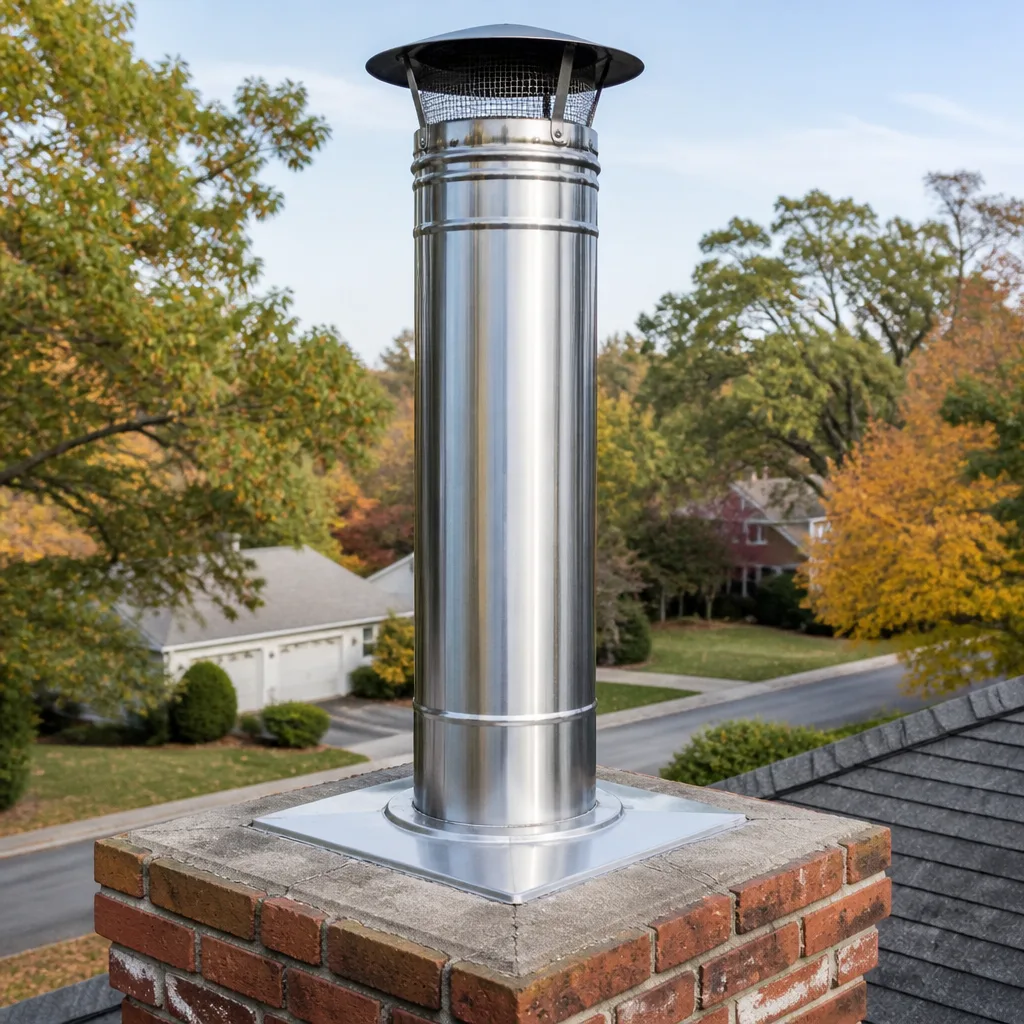 Flue relining
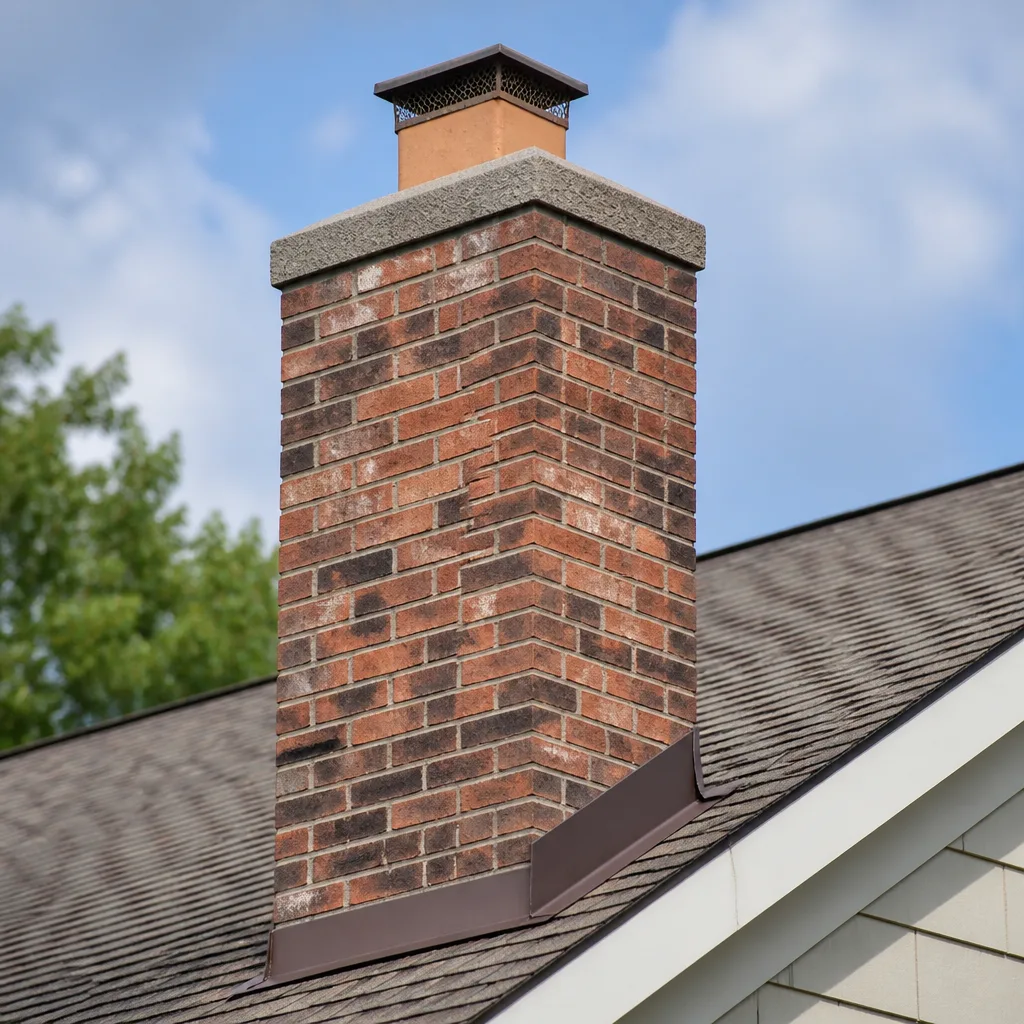 Masonry repair
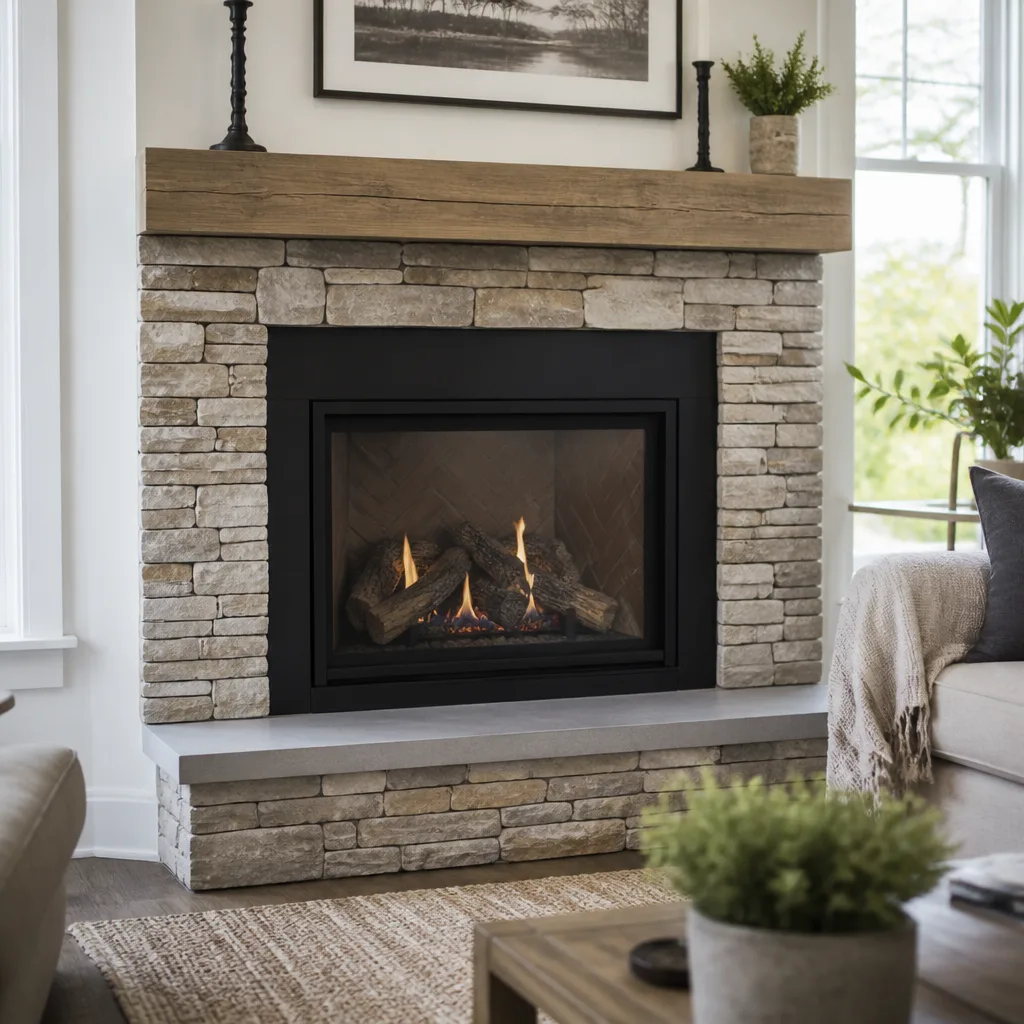 Gas fireplace service
Level 1 sweep and inspection to the NFPA 211 annual standard - flue, crown, cap, and flashing checked and photographed
Chimney sweep logs do not sweep chimneys. They loosen some creosote - which then falls where a brush and vacuum still have to collect it.
Seasonal Chimney Cleaning Care for Fort Myers: Year-Round Homeowner’s Guide
The worst thing you can do to a Fort Myers chimney is use it twice in December and then leave the damper closed against summer humidity for nine months without an inspection. That’s how you end up with a liner full of condensation damage and a raccoon family by August. Most chimney advice you’ll read online was written for a climate with hard freezes and long heating seasons. Fort Myers doesn’t work that way. We have two seasons that matter for a chimney: a short burning window from November through March, and a long dormancy period where the real damage quietly builds up. This guide walks you through the full calendar, month by month, so you know exactly what to do and when.
Quick Answer
Seasonal chimney care in Fort Myers centers on a pre-season cleaning and inspection in October before your first fire, light monitoring through the November-to-March burning season, a post-season sweep and close-out in April to clear ash and seal the flue, and a summer dormancy check for wildlife, moisture, and cap wear. The biggest risk here isn’t winter freeze damage – it’s nine months of humidity working on an unsealed chimney.
Styles & brands we work with
- Sweep & inspection
- Caps & crowns
- Flue relining
- Masonry repair
- Gas fireplace service
Table of Contents
- Why Fort Myers Has Two Chimney Seasons, Not Four
- October: The Highest-Value Window of the Year
- November Through March: Monitoring During Active Use
- April: The Post-Season Sweep and Summer Close-Out
- May Through September: Florida’s Dormancy Hazards
- How the Rainy Season Interacts With a Poorly Sealed Chimney
- Don’t Forget the Dryer Vent in the Off-Season
- Common Mistakes to Avoid
Why Fort Myers Has Two Chimney Seasons, Not Four
A chimney guide written for Ohio or Vermont talks about four seasons because those chimneys genuinely experience four distinct phases. Freeze and thaw cycles crack mortar. Heavy snow loads stress the cap. Spring rain soaks a crown that froze all winter. None of that applies here. If you follow Northern-state advice in Fort Myers, you’ll spend effort on problems you don’t have and ignore the ones you do.
The two seasons that matter are straightforward. The burning season runs roughly November through March, when evening temperatures dip enough that a fire feels good. It’s short by national standards, but it’s real, and creosote accumulates during it just as it does anywhere else. Then comes the dormancy period, about seven months from April into October, when most chimneys sit completely unused. That’s where this climate differs from everywhere else.
During dormancy, three things happen at once. Humidity sits high for months, and any moisture that gets into the flue stays there far longer than it would in a drier climate. Wildlife looks for shelter during the hot, wet summer. And ultraviolet light steadily degrades rubber gaskets and seals on the cap and around the crown. By the time October arrives in Fort Myers, a chimney that was fine in March can have a deteriorated crown, a lintel of nesting material, and a rusted damper.
That’s the reason we treat the calendar the way we do. October is about preparation. The burning months are about monitoring. April is about closing the chimney down properly. And summer is about defense. Miss any one of those phases and you inherit the problems of the next one.
Why “I’ll Get to It Before Winter” Fails Here
In cold climates, the first freeze serves as a natural deadline. Here, there’s no hard signal that the burning season has started – one night it’s cool enough for a fire, and you light one. If the chimney hasn’t been inspected by then, you’re burning into an unknown flue. October is the practical deadline because it sits just before the first cool evenings in Fort Myers, not because there’s any weather event forcing the issue. Homeowners who wait until the first cold snap find themselves trying to book a sweep during the busiest two weeks of the year.
October: The Highest-Value Window of the Year
October is the single most valuable month for chimney work in Southwest Florida. The house has just come through seven months of heat and humidity, the burning season is weeks away, and there’s still time to fix anything before you need the fireplace. A cleaning and inspection done now tells you whether your chimney is ready for the season, and it gives you a full window to schedule any repair without pressure.
Here’s what a proper October visit covers:
- Full sweep of the flue to remove soot and any creosote left over from last season.
- Inspection of the firebox, damper, smoke chamber, and flue lining.
- Cap and crown inspection, checking for cracks, loose fasteners, and gasket wear from the summer.
- Check for wildlife intrusion inside the flue or on top of the smoke shelf.
- Exterior check of the chimney structure above the roofline.
- A camera inspection of the flue where the layout is complex or the liner type is uncertain, with photos you can look at yourself.
We repair, not just inspect, so anything we find in October can usually be handled in the same visit or scheduled immediately. A missing chimney cap in Fort Myers gets replaced with a Gelco cap on the spot. A hairline crown crack gets sealed. If the flue has a rough interior that’s allowing moisture to cling and creosote to build faster, we resurface it with HeatShield ceramic flue resurfacer rather than recommending a full liner replacement. That’s the value of an October visit: it happens before your chimney is in use, so there’s no rush and no compromise on the fix.
What We Actually Look For in October
The most common findings on a Fort Myers chimney in October are crown cracks, missing or damaged caps, and a liner that’s rough or spalled from a summer of moisture. We also frequently find bird nests or the start of a squirrel’s nest near the top of the flue. None of these are surprising after a full summer, but every one of them affects how the chimney performs once you start burning. The point of the October visit is to catch them while the chimney is quiet and fixable on your schedule.
November Through March: Monitoring During Active Use
Once you start burning, the chimney moves into active service and your job shifts from preparation to observation. You’re not doing anything complicated. You’re paying attention. Most problems that develop during the burning season give you a signal before they become serious, if you know what to watch for.
We tell Fort Myers homeowners to watch for four things during the November-to-March window:
- Draft problems. Smoke that rolls into the room instead of going up the flue usually means a blockage, a damaged damper, or a flue that’s too cold. If it happens once, it’s a cool flue. If it happens every fire, something needs a look.
- Odors when the fireplace isn’t burning. A smoky smell in the room on a warm day points to a damper that isn’t sealing properly, or a flue that’s drawing air backward. In Fort Myers, this often shows up on a humid evening when the air outside is warmer than inside.
- Visible creosote on the damper or smoke chamber. If you can see a crusty or shiny buildup when you open the damper, there’s more of it higher up. That’s your cue to schedule a sweep rather than wait until April.
- Ash accumulation. A firebox packed with old ash reduces draft and can hide cracks in the firebox walls. Scoop when it’s cool, and leave about an inch as a bed for future fires.
If you see any of these, don’t wait for the post-season sweep in April. A mid-season visit costs less than the repair that a neglected creosote buildup can lead to. A quick inspection during the season is straightforward, and if we find something on the camera, we can often fix it with materials we carry for the visit – a Gelco cap, a Famco venting component, or a chimney sweep with camera inspection included.
Creosote in a Short Season
Some homeowners assume that a short Fort Myers burning season means creosote never reaches dangerous levels. That’s a mistake. Creosote buildup depends on the wood you burn, how often you burn it, and whether the fire is hot or smoldering, not on how many days of winter you get. A handful of slow, smoky fires a week for four months on green or unseasoned wood will build creosote faster than daily hot fires on dry hardwood. Every fire adds to the coating already there. The only way to know how much has built up is to look.
April: The Post-Season Sweep and Summer Close-Out
April is the second most important month on the Fort Myers chimney calendar. The burning season is over, summer humidity is on its way, and whatever condition your chimney is in right now will sit there for the next seven months. A chimney cleaned and closed out properly in April can go the whole summer without a serious problem. One left dirty and open to the weather will not.
The post-season close-out has a clear order. Follow it as written and the chimney takes care of itself until October:
- Complete sweep. Remove the season’s soot and creosote while the fireplace is still cool and unused.
- Empty and clean the ash pit. Wet ash turns corrosive over a summer. Get it out and let the firebox dry completely.
- Scrub the firebox. Wipe down brick and mortar with a solution that won’t leave residue that attracts moisture.
- Confirm the damper closes fully. A tight damper keeps humid air out of the flue during the rainy season.
- Inspect and seal the crown. Any crack, no matter how small, lets water in all summer. Sealing here is the single highest-value step in the entire close-out.
- Check the cap and its gasket. UV degradation through the summer starts the moment the days get longer. A cap that fits tight in April is still tight in October.
- Walk the roofline and structure. A quick look at the flashing, mortar joints, and chimney exterior tells you what needs attention before the heavy afternoon storms arrive.
Do the close-out well and you’ll find far fewer things wrong in October. Skip it and the same chimney will arrive at the burning season with a warped damper, a crown that’s spider-cracked, and possibly a wildlife tenant. In our experience, the difference between a chimney that needs a quick October sweep and one that needs a full rescue job is usually decided in April.
May Through September: Florida’s Dormancy Hazards
This is where Fort Myers chimneys differ most from the rest of the country. During the seven months your fireplace isn’t in use, the chimney faces the hazards of a warm, humid climate rather than those of a freezing one. Freeze damage isn’t on the list here. But wildlife intrusion, moisture wicking, and ultraviolet degradation all peak during the summer, and all of them do lasting harm if ignored.
Wildlife Intrusion: The Peak Season
Late spring through early fall is the peak season for birds, squirrels, and raccoons looking for a dry, protected space to nest, and a chimney is exactly that. A missing or loose cap is an open door. Once an animal takes up residence, you have a nest in the flue, a blockage that will cause draft problems the moment you light a fire in November, and often a smell that finds its way into the house through the summer. The best defense is a properly fitted cap. Gelco caps seal tightly and hold up well in the heat, and replacing a torn or missing one now is far easier than clearing a nest in October. If you’re already hearing scratching or chirping in the chimney, don’t light anything. Call us and let us inspect before you do.
Humidity Wicking Through the Crown
Hairline cracks in the crown, the concrete top of the chimney, look harmless. In a Fort Myers summer, they aren’t. Each afternoon storm soaks the crown, and water wicks down through the cracks into the masonry. Once inside, it has nowhere to go quickly and works on the brick and mortar for weeks. Over a season, a small crack spreads, the crown develops larger fissures, and moisture begins showing up as staining on the chimney breast inside the home. Sealing the crown every year is cheap insurance compared to a rebuild. We check and seal the crown on every spring close-out for exactly this reason.
UV Degradation of Cap Gaskets
Rubber gaskets and sealants on caps and around flue collars don’t last indefinitely under Florida sunshine. UV exposure hardens and cracks them, usually from the top down. When the seal fails, water gets into the cap assembly and often finds its way to the flue. The fix is simple – replacing the gasket or the cap – but only if somebody checks. A cap that looks fine from the ground can have a seal that’s already gone.
What Water Intrusion Looks Like From Inside
You don’t have to climb onto the roof to spot moisture problems. Look for these signs inside your home during the summer:
- Damp or discolored patches on the wall or ceiling near the chimney.
- White, chalky staining on brick facing, often called efflorescence, which appears when moisture pushes through masonry.
- A musty or earthy smell near the fireplace on humid days.
- Rust spots on the damper, firebox, or metal liner components.
- Water stains or actual dripping inside the firebox after heavy rain.
Any of these is a sign that the chimney isn’t sealed properly. If the leak is coming through the crown, resurfacing and sealing will usually fix it. If it’s coming through a damaged flue, that’s where Fort Myers homeowners often discover a HeatShield resurfacing or a DuraFlex liner installation is needed. Either way, the problem is fixable if caught before the end of summer. If it isn’t, the damage compounds every storm.
How the Rainy Season Interacts With a Poorly Sealed Chimney
Fort Myers’ rainy season runs roughly June through September, and it’s the single biggest stress test your chimney faces all year. Afternoon storms are heavy and frequent, and a chimney that isn’t sealed tightly gets wet repeatedly and dries out only slowly. What makes it worse is that nobody is using the chimney during those months, so nothing is moving air through the flue to dry it out. The chimney just sits wet.
A properly sealed chimney during the rainy season does three things well. The cap keeps rain from falling directly into the flue. The crown sheds water off the top of the chimney structure. The damper keeps humid outside air from drifting up through the firebox. When any one of those fails, moisture gets in and stays in, and the flue lining starts to break down. Rust on a metal liner, spalling on masonry, and crumbling mortar joints are all moisture problems, not creosote problems.
That’s the reason we emphasize the April close-out so heavily in Fort Myers. The rainy season doesn’t cause new problems. It exposes the ones you already had. Get the chimney dry and sealed before the first storm, and you’ll come out of the summer with a flue that’s still intact.
Don’t Forget the Dryer Vent in the Off-Season
The chimney isn’t the only fire-safety system in a Fort Myers home that benefits from off-season attention. The dryer vent has the same pattern of buildup that a flue does, and it suffers more in a hot, humid climate because lint tends to clump rather than drift. When lint accumulates and combines with the heat of the dryer, it can ignite. That’s why dryer-vent cleaning is treated as a fire-safety service, not an optional add-on.
The dormancy months are a natural time to handle it. There’s no fireplace activity to work around, and the vent is running constantly, which means lint is building up week after week. A visit during the summer catches it before the buildup gets serious. We offer dryer vent cleaning alongside chimney work, so one call covers both. There’s no reason to hire two contractors for two systems that share the same failure mode: heat plus accumulated debris.
Owners of rental properties and multi-unit buildings in Fort Myers often schedule both services at the same time for documentation purposes. A camera inspection and photo report on each system gives a landlord a record of what was done and what condition the venting was in – useful for insurance and for turning over a unit to a new tenant.
Common Mistakes to Avoid
- Waiting for the first cool evening to book. By the time you’re ready for a fire, so is everyone else in Fort Myers, and the schedule is tight. Book in October so you’re not the one calling on the first chilly night.
- Skipping the spring close-out because the chimney “was fine” in November. A chimney that performed perfectly in March can still arrive at October with a cracked crown and a dirty flue. The close-out isn’t a repair visit – it’s what keeps next season simple.
- Assuming a hot climate means no creosote. Creosote builds from the wood you burn and how you burn it, not from the outside temperature. A short season still means weekly fires that leave deposits on the flue walls.
- Leaving the damper open between fires. In a Fort Myers summer, an open damper lets humid air into the flue all day. That’s how liners get rusty and mortar joints soften. Close it every time, not just at the end of the season.
- Leaving a chimney uncapped through the summer. Wildlife, rain, and UV all get access through an open flue. A Gelco cap costs far less than clearing a nest and repairing the flue it damaged.
- Treating the dryer vent as a separate project. If the chimney gets swept and the dryer vent doesn’t get cleaned, you’ve handled half the fire-safety picture. Both systems deserve the same attention.
- Ignoring a smoky smell in the off-season. A chimney that smells on warm days is telling you a seal has failed somewhere. Waiting until November means it’s had a whole summer to get worse.
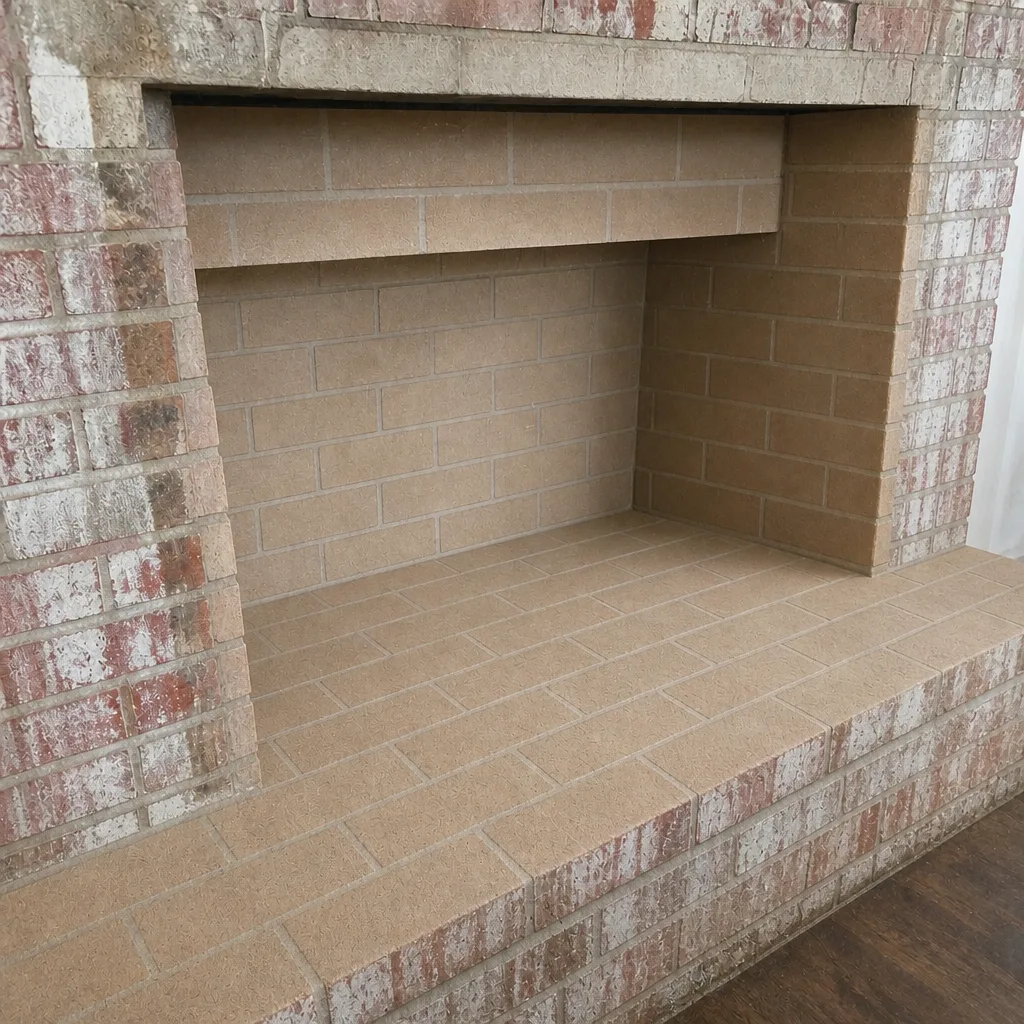
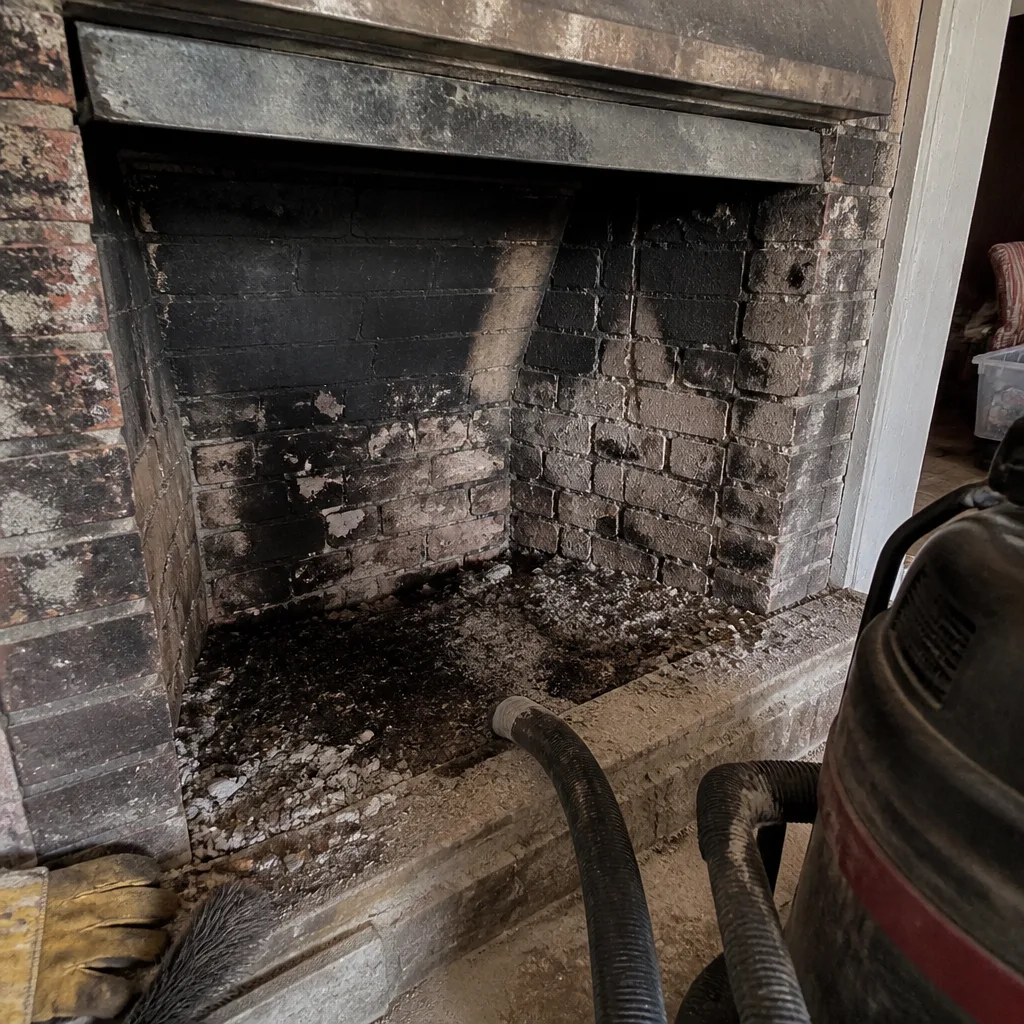
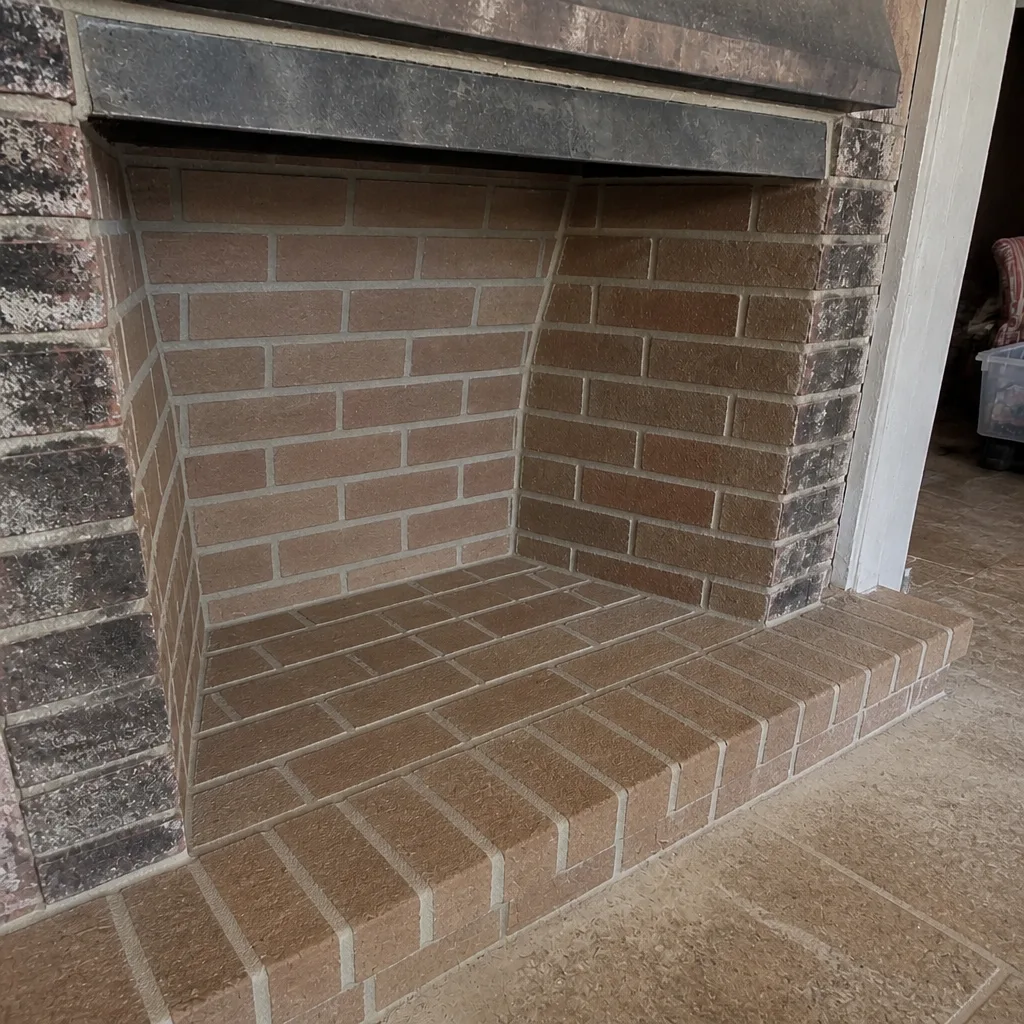
See the difference
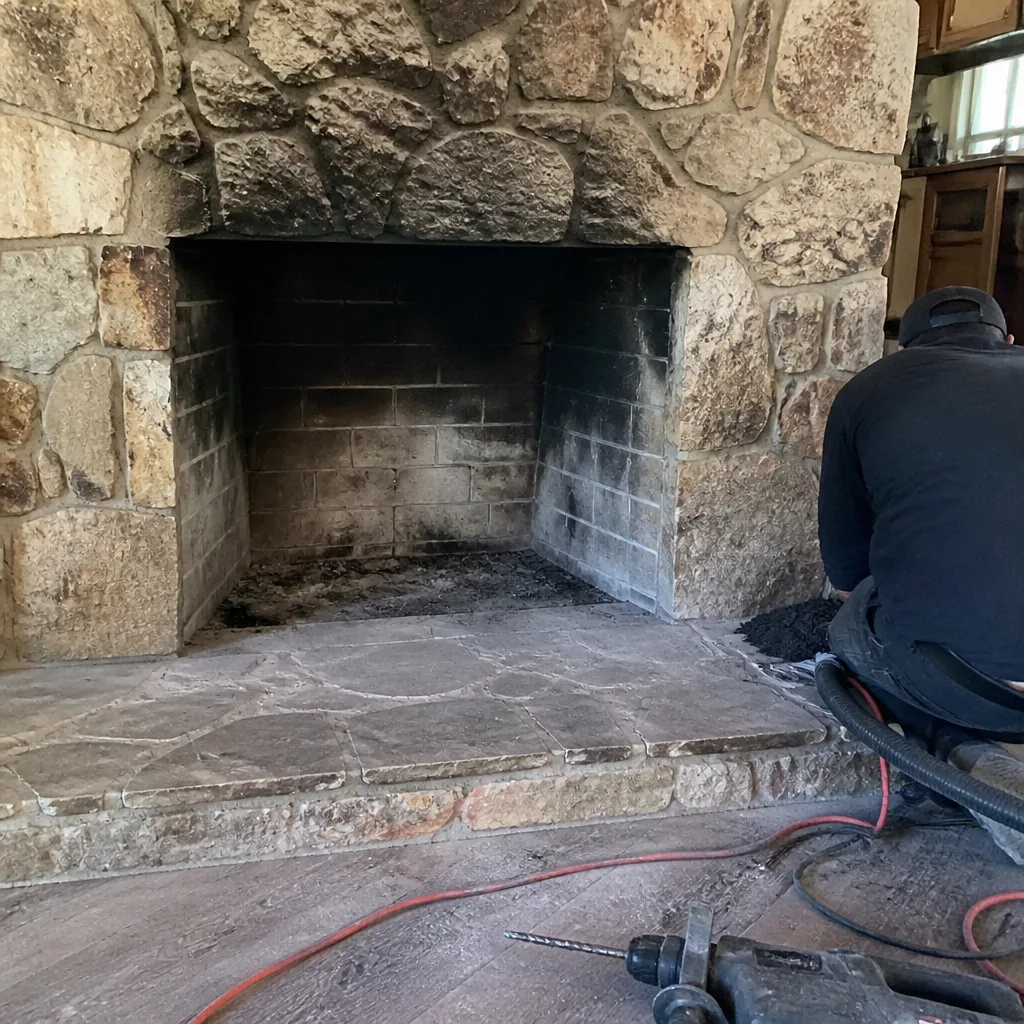 Before
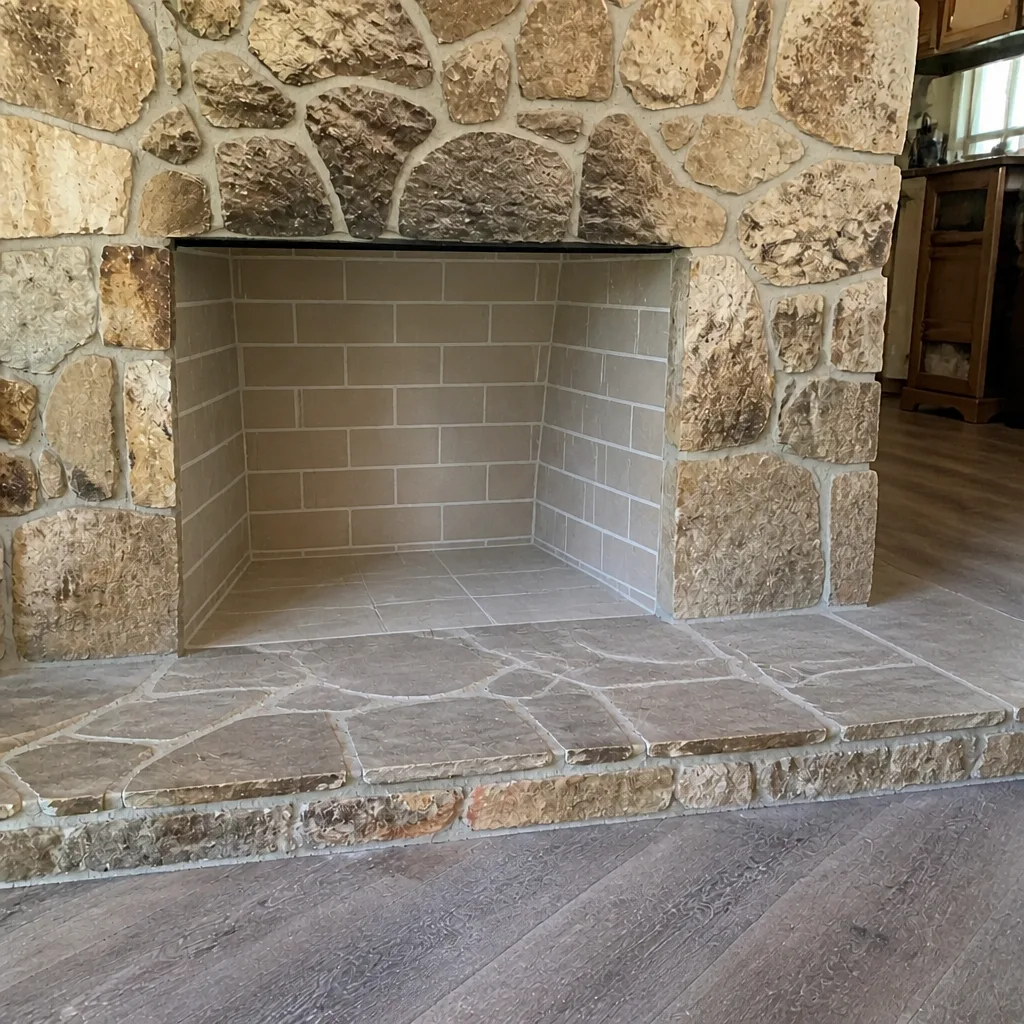 After
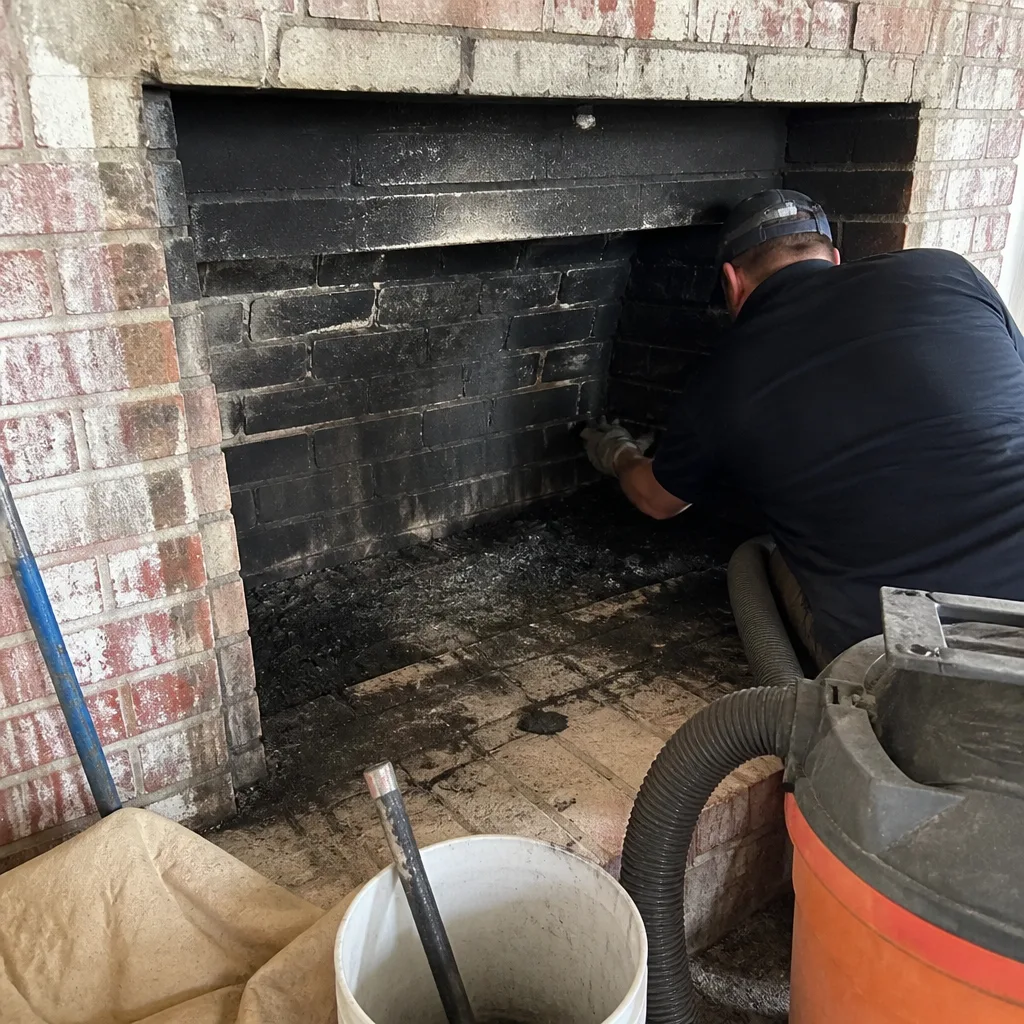 Before
 After
 Before
 After
When to Call a Professional
Some seasonal chimney work is simple monitoring, but some tasks belong in the hands of someone trained for them. Call us if you notice a smoky odor on warm days, visible creosote on the damper, water staining inside the firebox, damp patches on the wall near the chimney, or any sign of an animal in the flue. Call us before your first fire if you can’t remember when the chimney was last inspected, and call us in April if you’d rather not deal with the close-out yourself. We also handle chimney repairs – including liner work, crown repair, and cap replacement – so if a cleaning visit turns up a problem, it can often be fixed on the same visit rather than rescheduled. Fort Myers Chimney Sweep offers free estimates in Fort Myers – call (844) 834-3136. Our technicians have up to 9 years of experience and use professional-grade materials, not hardware-store substitutes.
Frequently Asked Questions
Once a year for most homes, timed to the October pre-season window, with an additional sweep mid-season if you notice visible creosote buildup on the damper or smoke chamber. A short burning season doesn’t change the rule – it just changes when the sweep happens. Call us for a free estimate and we’ll set the right schedule for how much you actually burn.
In many cases it can be resurfaced rather than replaced. If the liner is intact structurally but rough or pitted inside, HeatShield ceramic flue resurfacer can restore a smooth surface without pulling the old liner out. If the flue has offsets or the existing liner is compromised, a DuraFlex flexible liner system may be the right fix. We won’t recommend either without showing you camera evidence of what’s actually wrong, so you can decide based on what you see, not on what we say. Call (844) 834-3136 for an inspection and honest answer.
Creosote continues to build on the flue walls with every fire, and once it reaches a certain thickness the risk of a chimney fire goes up significantly. Beyond that, a flue that isn’t inspected can develop a hairline crack or a damaged liner without anyone noticing, and the next fire sends smoke and carbon monoxide where it shouldn’t go. We’re not going to overstate this – a single skipped year isn’t a catastrophe for most chimneys. But two or three in a row, especially in Fort Myers’ humid climate, is when we start finding expensive problems. Call us for a sweep and a camera inspection and we’ll tell you exactly what condition the flue is in.
Yes, but the mechanism is indirect. The storms don’t damage a sealed chimney. They expose the problems in one that isn’t. Water gets into a cracked crown or an unsealed flue and stays there for weeks because there’s no fire to dry it out. That’s why the April close-out matters so much here – it’s the step that protects the chimney through the whole wet season. Call us in April or May if you’d rather have it done right.
You can, but it’s rarely worth it. The humidity is already high, the draft is weak because indoor and outdoor temperatures are close, and a few summer fires just deposit creosote on a flue that will sit unused for months. If you do burn during the summer, make sure the chimney has been inspected recently and the flue is clear. Call (844) 834-3136 and we’ll help you decide whether a summer inspection makes sense for your setup.
A seasonal sweep removes soot and creosote from the flue. A full inspection goes further: it looks at the firebox, damper, smoke chamber, flue lining, crown, cap, and exterior structure, and includes a camera inspection of the flue with a photo report. Most Fort Myers homeowners get both together in October or April, because the sweep is only half the value of the visit. Call (844) 834-3136 for a free estimate on either service.
The Bottom Line
Fort Myers doesn’t have four chimney seasons, and following advice written for a colder climate wastes time on problems you don’t have. What you do have is a short burning window and a long dormancy period that quietly damages an unsealed chimney. The four moves that matter are October cleaning and inspection, light monitoring during the burning months, an April close-out that dries and seals the chimney before the rainy season, and a summer defense against wildlife, moisture, and UV wear. Handle those well, handle the dryer vent alongside them, and your chimney stays ready every time you want to light a fire.
Fort Myers Chimney Sweep handles sweeps, repairs, and dryer vent cleaning in the same visit, using materials from DuraFlex, HeatShield, Gelco, Famco, Olympia Chimney, and Copperfield. We repair, not just inspect – so if a camera inspection turns up a problem, it can usually be fixed without a second trip. Everything we recommend comes with photos you can look at yourself, and we’ll tell you when something can safely wait. Call (844) 834-3136 for a free estimate. We answer 24/7. Fast dispatch from 7am to 7pm, Sunday through Friday.
Written by the team at Fort Myers Chimney Sweep.