
Last updated November 15, 2026
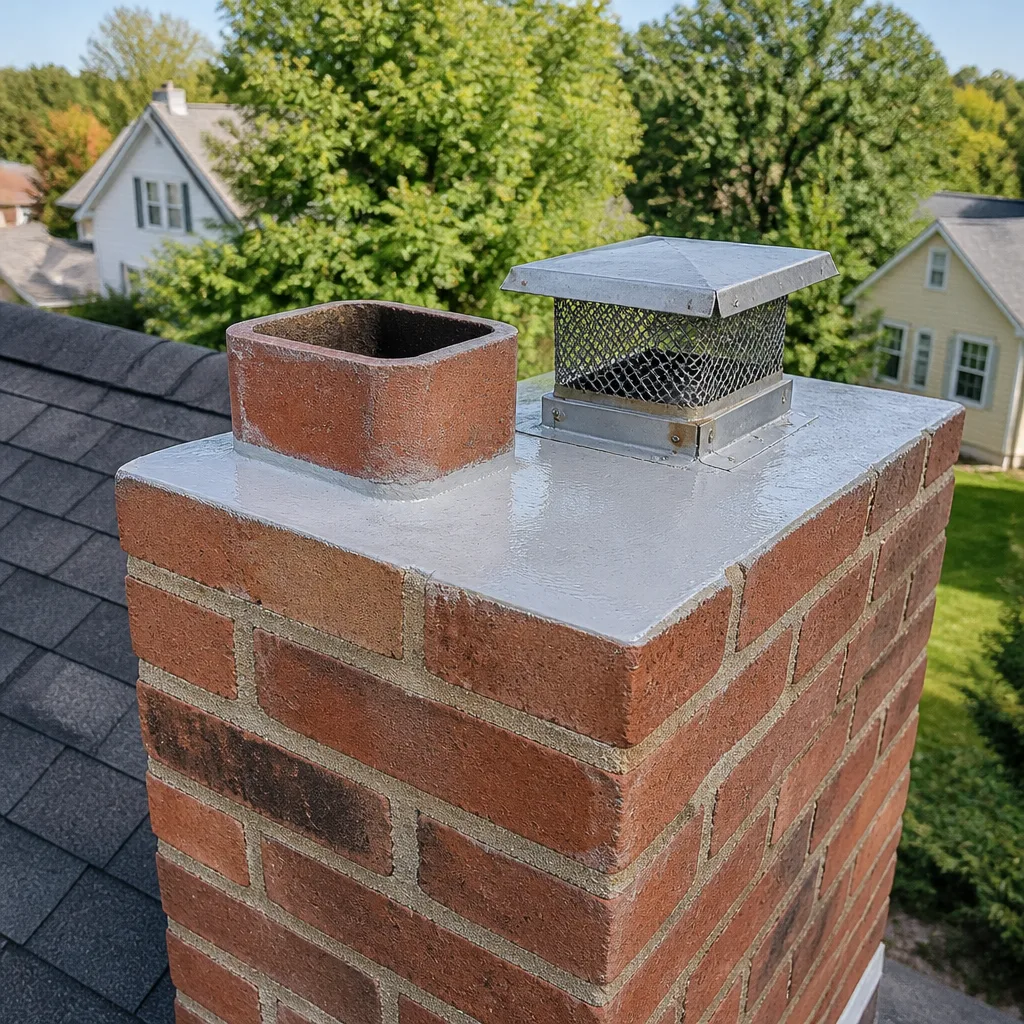 Sweep & inspection
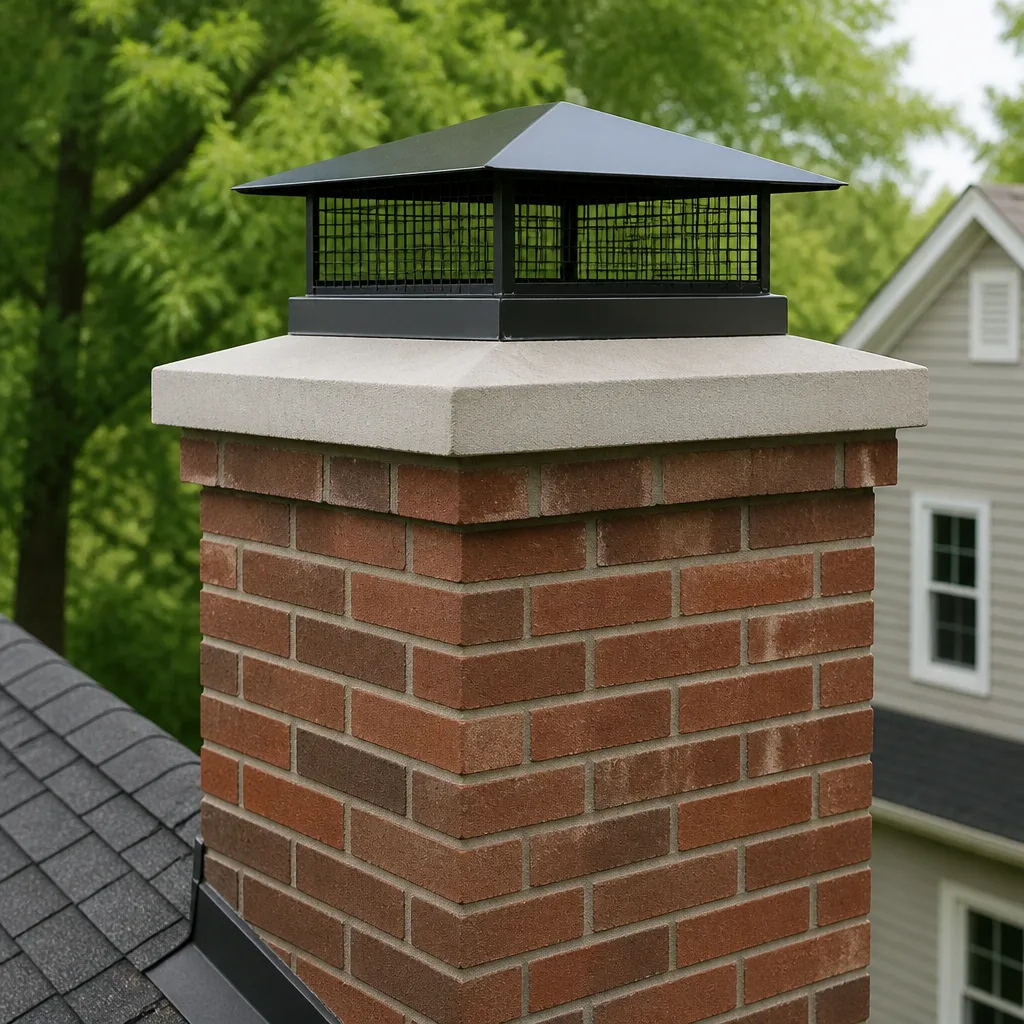 Caps & crowns
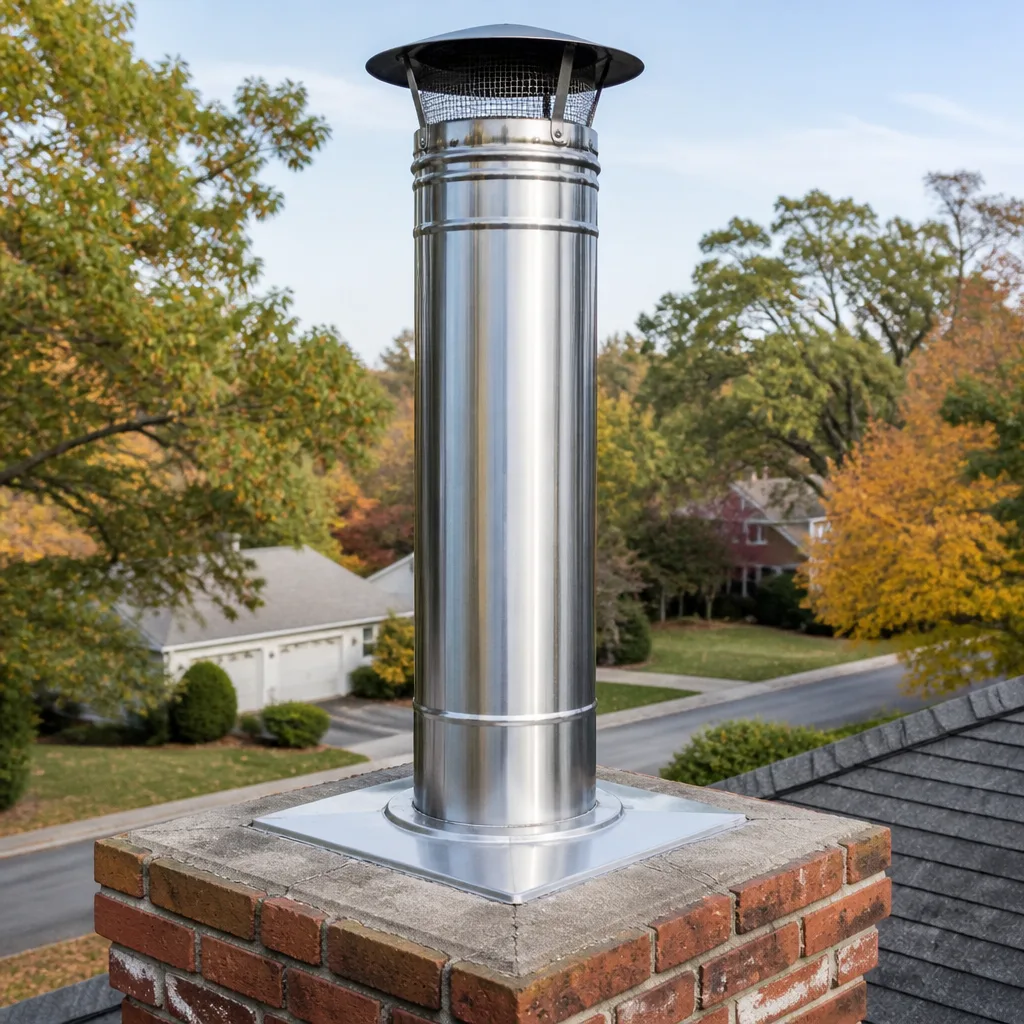 Flue relining
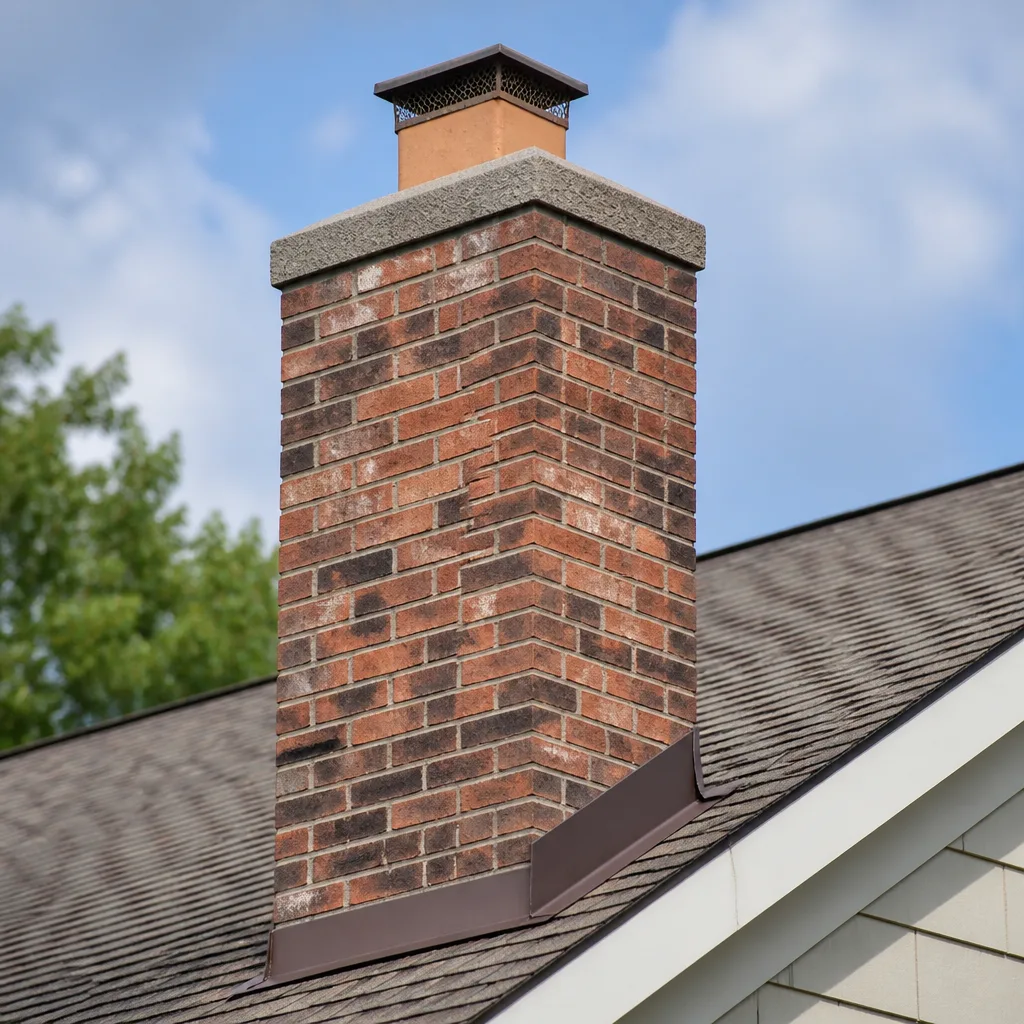 Masonry repair
 Gas fireplace service
Level 1 sweep and inspection to the NFPA 211 annual standard - flue, crown, cap, and flashing checked and photographed
Chimney sweep logs do not sweep chimneys. They loosen some creosote - which then falls where a brush and vacuum still have to collect it.
DIY vs Professional Chimney Cleaning: The Fort Myers Homeowner’s Decision Guide
Chimney cleaning brush kits arrive with a brush, a few fiberglass rods, and no way to see what you’re brushing past. That’s the part most homeowners don’t think about until they’re already on the roof. Without a camera scan of the flue, a homeowner can dislodge a cracked tile section or a loose mortar joint and never know they’ve opened a pathway for combustion gases to enter the living space. In a Fort Myers home where the fireplace runs through the mild months and the flue has been sitting since last season, that’s not a hypothetical. This guide lays out exactly what you can safely do yourself, what genuinely requires professional equipment and eyes, and how the insurance math on a Fort Myers chimney really works out.
Quick Answer
Professional chimney cleaning is worth it for the vast majority of Fort Myers homeowners because a proper sweep includes a camera scan of the liner, a creosote stage assessment, and HEPA-contained soot removal that a homeowner simply cannot replicate with a brush kit. DIY is reasonable only for light, genuinely low-risk tasks: emptying loose ash from the firebox, checking the damper by flashlight, and clearing debris you can safely reach from the cap screen. Anything that touches the flue interior, the liner, or creosote assessment belongs to a trained professional.
Styles & brands we work with
- Sweep & inspection
- Caps & crowns
- Flue relining
- Masonry repair
- Gas fireplace service
Table of Contents
- What You Can Legitimately Do Yourself
- What Requires Professional Equipment
- Understanding Creosote Stages (And Why It Matters)
- The Fort Myers Wildlife Factor in Your Flue
- The Insurance Clause That Makes DIY Risky
- The Cost Reality Check: DIY Savings vs Liability
- What a Professional Chimney Sweep in Fort Myers Actually Involves
- How Often Fort Myers Homes Need a Sweep
What You Can Legitimately Do Yourself
We believe in giving Fort Myers homeowners a straight answer, so let’s start with what’s actually on your side of the line. Some chimney maintenance is genuinely low-risk, requires no special equipment, and doesn’t void any insurance clause. If you want to feel more connected to your fireplace and spend less on non-essential service calls, these tasks are where to put your energy.
The distinction is simple: anything you can reach with a flashlight and your hands, without climbing onto the roof, is fair game. Anything that requires reaching inside the flue or working from height belongs to someone trained for it.
Tasks a homeowner can reasonably do
- Empty loose ash from the firebox. Once the firebox is completely cool, scoop out accumulated ash into a metal container. Leave a thin bed of ash for insulation if you burn wood regularly, but clear the bulk of it so airflow isn’t choked.
- Check the damper by flashlight. Open and close the damper and watch that it travels freely and seats flush. A damper that sticks, doesn’t fully open, or drops shut on its own is a functional problem worth flagging to a technician.
- Inspect the firebox interior visually. Look for loose mortar, cracked firebrick, or gaps between bricks. You’re not diagnosing stage-three creosote from a flashlight; you’re looking for obvious damage to report.
- Clear debris from the cap screen if safely accessible. If your cap is on a low single-story roof with a safe pitch and you’re comfortable on a ladder, you can sometimes brush away twigs or leaves from the outside of the screen. If any part of this gives you pause, don’t do it.
- Keep the firebox area clear. No cardboard boxes, no decorations, no stored wood against the fireplace face.
What you should not do
Do not climb onto a roof you’re unsure of, and do not run a brush up a flue you haven’t had inspected. A brush on fiberglass rods that binds up in a flue can dislodge mortar, crack tiles, or knock a cap loose. Those are repairs that cost significantly more than the sweep you were trying to avoid.
What Requires Professional Equipment
The line between homeowner maintenance and professional work isn’t arbitrary. It maps to three specific pieces of equipment that a brush kit on Amazon doesn’t include, and one piece of knowledge that you cannot download: creosote stage recognition.
Here’s the honest comparison, laid out side by side.
| Task | Homeowner | Professional | Why it matters |
|---|---|---|---|
| Firebox ash removal | Yes, safe | Yes | Low risk, easy to do |
| Damper check | Yes, visual only | Yes, functional test | A pro tests operation under load |
| Rotary brush cleaning | No | Yes | Requires HEPA containment or soot fills the living space |
| Liner camera inspection | No | Yes | No way to see past a 90-degree offset without a camera |
| Creosote stage assessment | No | Yes | Requires recognizing stage 1, 2, and 3 by appearance and texture |
| Cap screen debris clearing | Sometimes, safe access only | Yes | Pro handles the height, and can see into the flue from the top |
The rotary brush is a real distinction. A hand brush on rods removes looser stage-one and stage-two creosote from the upper tiles, but it doesn’t spin the surface clean. A professional rotary head does, and it does so inside a HEPA vacuum containment system so the soot you dislodge ends up in a filter, not on the furniture in the room below. That’s the difference between a clean chimney and a dust cloud. When we do a chimney sweep, the containment is set up before the brush ever touches the flue.
The camera matters just as much. A flue with any offset, or a two-story run with more than a few feet of vertical flue, cannot be assessed from below with a flashlight. What you see from the firebox is the first few feet; what you cannot see is the cracked tile on the back side of the flue four feet up, which is exactly the pathway combustion gases use to slip into a home.
Understanding Creosote Stages (And Why It Matters)
Creosote is the residue from burning wood, and it forms in three progressively more dangerous stages. A homeowner cannot reliably identify which stage is in their flue without training, and the stage determines whether the flue can be swept normally or whether more involved work is required.
- Stage one: soot and light flake. This looks like black dust or a thin flaky layer. It’s the most common staging in regularly burned, well-seasoned wood fires and brushes away cleanly.
- Stage two: crusted and shiny-black. This is denser soot with a hard, sometimes glazed surface. Rotary brush cleaning is required because a hand brush simply slides over it.
- Stage three: hardened, glazed, and tarlike. This stage has to be removed with professional mechanical tools. It’s also the stage tied to the highest chimney fire risk, which is why assessing it correctly matters.
A homeowner with a brush kit might remove stage-one flake and conclude the flue is clean. What they may have missed is a band of stage-two crust higher up the flue, or stage-three glaze that’s being masked by the flake above it. In our experience, this is where the DIY savings evaporate: the homeowner thinks the sweep is done, skips the inspection, and burns another season on top of an untreated hazard.
The winter schedule in Fort Myers is forgiving, but the creosote clock isn’t. Because the mild climate extends the burn season on both ends (cool mornings in December, occasional fires into March, sometimes earlier if the homeowner enjoys the ambience), there’s more total burn time than homeowners in colder climates sometimes assume. That extra burn time compounds creosote accumulation if the flue isn’t swept on schedule.
The Fort Myers Wildlife Factor in Your Flue
This is the Fort Myers-specific risk factor that makes DIY particularly inadvisable, and it doesn’t get discussed enough. A flue in a Fort Myers home during the warm months is a protected, dry, elevated cavity that birds, squirrels, and rodents treat as a nesting site. A homeowner who climbs up to clear a supposed “twig blockage” can find the blockage is a nest containing droppings, mites, and sometimes a live or deceased animal.
That scenario is not a brush-it-out situation. Bird and rodent droppings can carry pathogens, and mites and fleas from an active nest can spread into living spaces when the flue is disturbed. A professional sweep handles this with proper PPE, HEPA containment, and disposal protocols. A homeowner with a broom and a garbage bag on a ladder handles it very differently.
There’s also a performance problem that DIY homeowners run into after a wildlife nest: the nest material compresses and drafts differently than twigs, sometimes migrating down the flue and blocking the smoke path without being visible from the cap. A camera scan from below catches it. A brush stroke from above does not.
If you’ve never had your flue inspected and your Fort Myers home is more than a few years old, assume there could be wildlife debris in the flue until someone with a camera has told you otherwise. That’s not scare language; it’s the reality of the climate and the housing here. Professional assessment, not a brush from Amazon, is what tells you what’s actually in there.
The Insurance Clause That Makes DIY Risky
Some homeowners policies in Florida contain language that excludes or reduces fire claims if the chimney wasn’t professionally cleaned and inspected within a specified period, usually twelve months. The specific clause language varies by insurer, so you need to read your own policy. The phrase to look for is something like “regular professional chimney maintenance” or “documented professional cleaning,” and you want to know whether the clause is a condition of coverage or a recommendation.
Here’s why this matters more than the cost of a sweep. If a chimney fire damages your Fort Myers home and the insurer can point to a documented absence of professional cleaning, you can end up in a claim dispute that is far more expensive than any sweep you skipped. The paperwork trail from a professional sweep (a dated invoice, sometimes with a camera report and photos) is exactly the evidence a claim adjuster wants to see when the question is whether the homeowner took reasonable care.
A homeowner brushing their own flue has no such trail. There’s no date-stamped professional record, no camera footage, no third-party confirmation that the flue was in good condition at the start of the season. From an insurance standpoint, that’s the worst position to be in if something goes wrong.
We can work with your insurer to make sure the documentation is complete, which is a benefit property managers and landlords in Fort Myers value specifically. When a rental property has a chimney and the landlord needs to show documented maintenance for liability purposes, a professional invoice is the currency. A homeowner with a self-cleaned flue has no equivalent.
The Cost Reality Check: DIY Savings vs Liability
The DIY savings argument falls apart the moment you compare the cost of a sweep to the deductible on a typical homeowners policy. Even setting aside hazard entirely, the math doesn’t work in DIY’s favor.
Consider the ledger:
- DIY cost: A brush kit, fiberglass rods, a roof-safe ladder if you don’t own one, and a few hours of your time. Add the risk of a fall from the roof or a damaged flue tile you’ll pay to repair.
- Professional sweep cost: One service call, with a camera report attached to the invoice.
- Deductible: Usually well above the cost of a professional sweep, which is exactly the point. The sweep is cheaper than the deductible you’d pay if a chimney fire claim goes through, and far cheaper than the legal and claim dispute cost if the claim is denied.
We’re not going to quote you a fake dollar figure for either side of that comparison, because pricing is set per job and depends on the flue configuration and the amount of creosote. What we will say plainly is that the professional sweep sits well below a typical homeowners deductible, and a DIY brush kit plus a roofer’s repair bill for a cracked flue tile sits well above it. The “savings” is an illusion created by comparing the price of the brush kit to the price of the sweep while ignoring everything the sweep actually does.
For Fort Myers homeowners who’ve been quoted high numbers by someone else and are considering DIY as a reaction, get a second estimate before making the decision. A written estimate is the right way to compare. There’s more on realistic pricing expectations on the main Fort Myers service page, and we’re happy to walk through what your specific flue is likely to need.
What a Professional Chimney Sweep in Fort Myers Actually Involves
Understanding what a professional sweep covers makes the value comparison concrete. It’s not just a brush on a rod. A full professional sweep in a Fort Myers home typically follows a sequence like this.
- Setup and containment. Drop cloths on the floor, HEPA vacuum positioned at the firebox opening, and any draft issues addressed before the brush goes up.
- Camera scan of the flue. A camera is run through the length of the flue to check for cracks, offset issues, gaps in the liner, and wildlife debris. This is the stage a DIY sweep cannot replicate.
- Creosote stage assessment. The technician identifies the creosote stages present and determines whether the flue needs standard rotary cleaning, more involved removal, or a repair referral.
- Rotary brush cleaning. The flue is cleaned top to bottom with the right brush head for the liner material, inside the HEPA containment.
- Firebox and smoke chamber cleaning. The firebox, damper, and smoke shelf are cleaned and checked functionally.
- Cap and crown inspection. The cap screen, crown, and flashing are checked for damage or debris buildup.
- Report and recommendation. You get the findings, and if repair work is needed, it becomes a documented next step rather than a guess.
When repair work is needed, having it handled in the same visit is one of the reasons we stock professional-trade materials rather than generic substitutes. If the camera scan finds a deteriorated flue and a full reline isn’t the right answer, HeatShield ceramic flue resurfacer can often restore the liner without demolition. If a full reline is the right call, DuraFlex flexible liners handle complex offset flues that rigid systems can’t navigate. And because we also carry Gelco caps and Famco venting components, a damaged cap or venting issue found during the sweep can usually be addressed in the same visit rather than sitting as an open ticket for weeks.
The liner matters as much as the sweep. We’ve seen homeowners who treated the sweep as the finish line when the camera scan was actually the point. If your flue is more than a few seasons old and has never been camera-inspected, treat the first professional sweep as both a cleaning and a diagnostic. You’re not paying for the brush; you’re paying for the answer.
If you want the full picture of what’s included, the main Fort Myers Chimney Sweep page lays out the inspection-to-repair sequence. Our technicians have up to 9 years of experience walking Fort Myers homeowners through exactly this sequence.
How Often Fort Myers Homes Need a Sweep
For a Fort Myers home with a fireplace that runs through the cool season, one professional sweep per year is the standard baseline, and the best time to schedule it is before the first cool front of the year, so the flue is clean and ready when the fireplace starts seeing regular use. A home with light seasonal use may stretch that to every eighteen months, but a fireplace that runs through most of the mild season, or a home that burns unseasoned wood, needs the annual sweep.
Fort Myers climate considerations to keep in mind when you’re setting the schedule:
- Extended burn season. The mild climate stretches the season on both ends, so annual sweeps are the safer default.
- Humidity and storage. Wood stored outside in Fort Myers humidity takes longer to season. Wet wood creates more creosote, which accelerates buildup.
- Wildlife nesting season. The warm months are when birds and rodents use the flue. A pre-season sweep before the first cool front catches nesting debris before it becomes a firebox problem.
- Gas appliance maintenance. Homes that also use gas fireplaces or gas appliances should have the flue and venting checked on the same annual rhythm, since a gas flue doesn’t produce creosote but does need to be clear and correctly vented.
Property managers and landlords should plan sweeps on a documented annual cycle regardless of tenant use, because the insurance and liability value of the paper trail is the point. If a tenant’s fireplace has never been professionally cleaned, the landlord is holding the liability for a hazard they haven’t documented as addressed.
While we’re on the schedule, this is the time to think about your dryer vent. Lint accumulation in a dryer vent is the leading cause of dryer fires, and it’s a fire risk that lives in the same house as your fireplace. Getting dryer vent cleaning handled on the same annual rhythm as your chimney sweep is a simple way to close two fire-safety gaps with one scheduling decision. Keeping both on the same calendar means neither gets skipped.
Common Mistakes to Avoid
- Buying a brush kit before scheduling an inspection. Buying the kit first commits you to a task you can’t fully assess. Get the camera inspection first, then decide what’s worth doing yourself.
- Cleaning the flue from below without containment. Running a brush up a flue without HEPA containment dumps soot into the living space. Even if the brush catches creosote, the cleanup is a bigger project than the sweep.
- Assuming last season’s sweep covers this season. Fort Myers burn seasons stretch across many months. A flue swept in early fall should be checked again if the fireplace has run steadily through the winter.
- Clearing a wildlife nest without PPE. A nest in a Fort Myers flue can carry droppings, mites, and fleas. Treat any nesting debris as a professional removal, not a broom-and-bag job.
- Skipping the insurance clause review. Read your policy for “documented professional cleaning” language before you decide to skip a professional sweep. The clause is either there or it isn’t, and you want to know which.
- Treating “no visible smoke” as proof of a clean flue. A flue can have significant creosote buildup and still draft correctly until it doesn’t. Draft performance is not a clean-flue indicator.
- Climbing a roof you aren’t confident on. A fall from a Fort Myers roofline is a bad trade for a brush kit’s worth of labor saved. If you’re not confident on the roof, don’t go up.
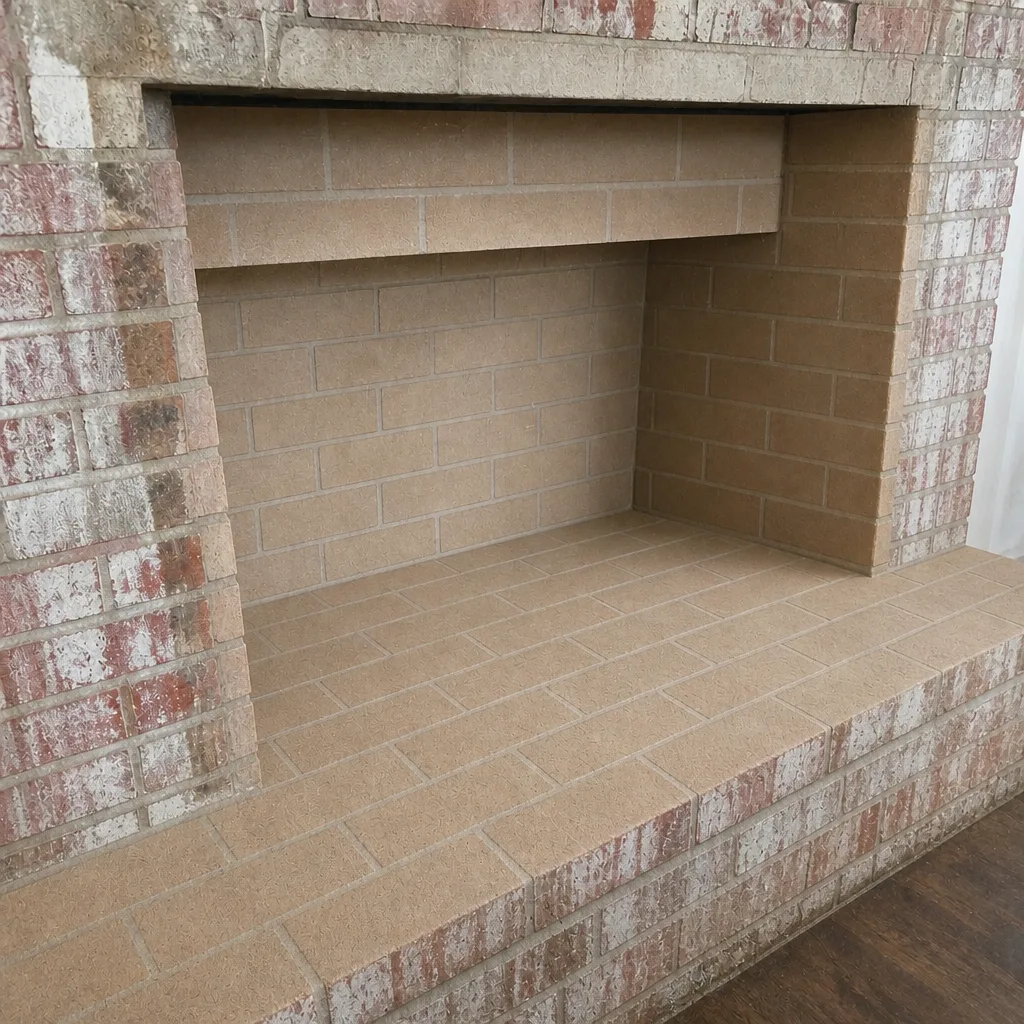
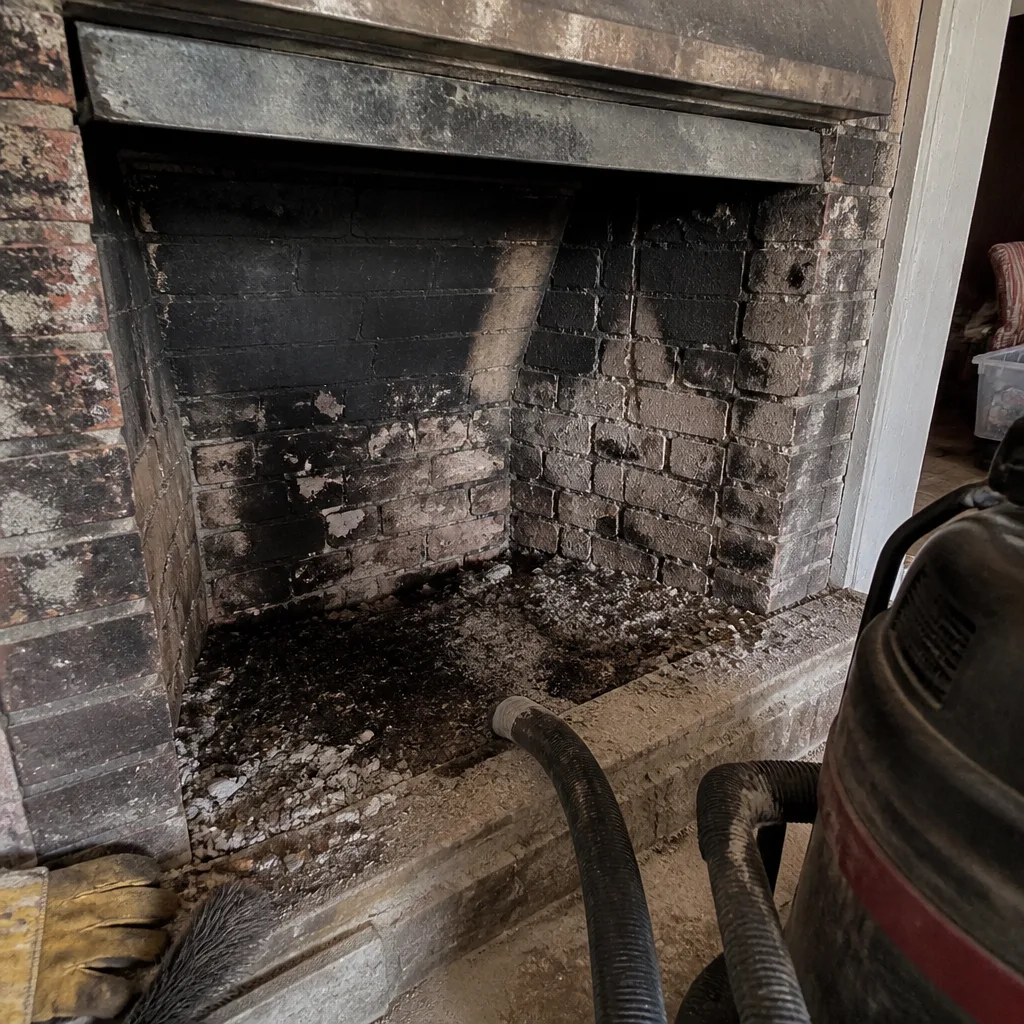
See the difference
 Before
 After
 Before
 After
 Before
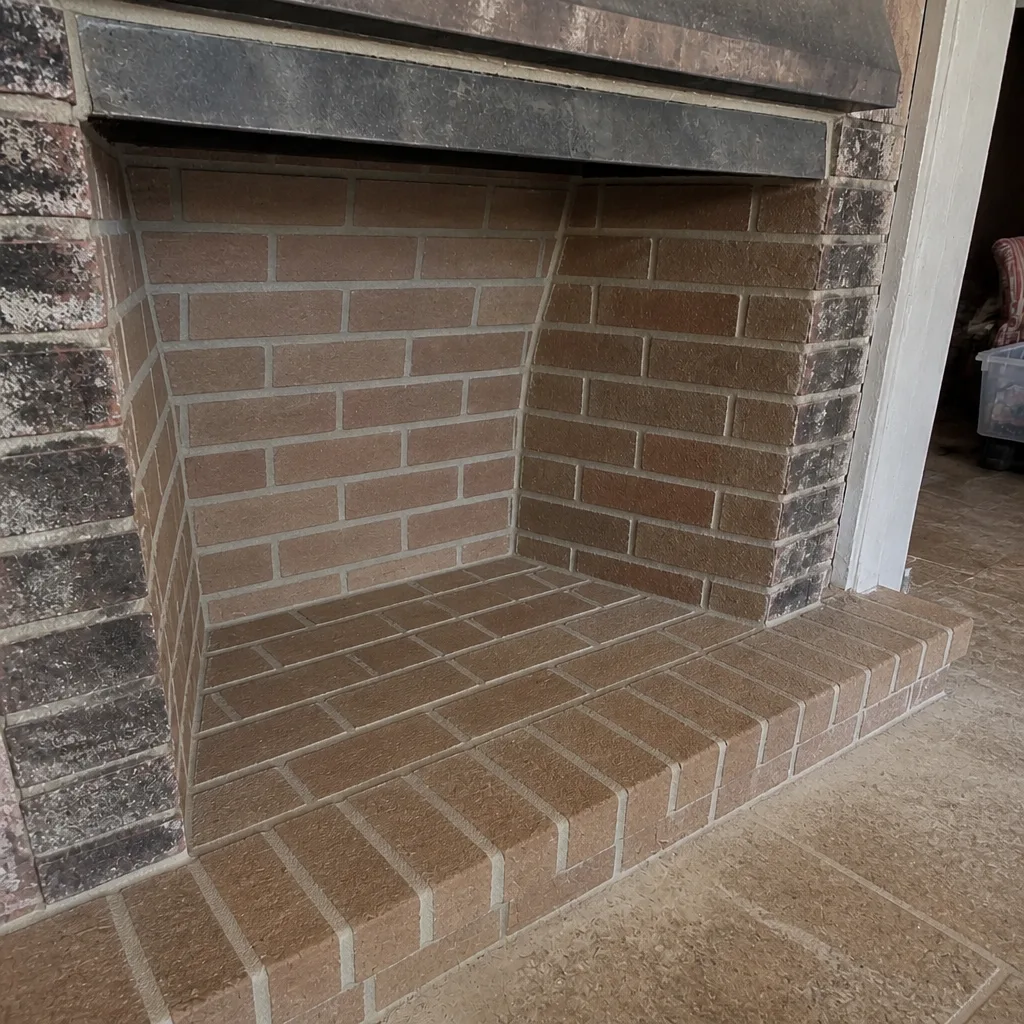 After
When to Call a Professional
Call a professional for any of the following: any flue that hasn’t been camera-inspected in the past year, any suspected wildlife nesting, any visible creosote that looks glazed or tarlike, any crack or loose mortar in the firebox, any smoke that drafts back into the room instead of up the flue, and any question about your insurance policy’s cleaning requirements. If you’re not sure which of those applies, that’s the call. Fort Myers Chimney Sweep offers free estimates in Fort Myers. Call (844) 834-3136. We answer 24/7. Fast dispatch from 7am to 7pm, Sunday through Friday.
Frequently Asked Questions
You can safely handle light maintenance like emptying loose firebox ash, checking the damper by flashlight, visually inspecting the firebox interior, and clearing debris from the cap screen if the roof is safely accessible. You cannot safely handle rotary brush cleaning, liner inspection, or creosote stage assessment without professional equipment. The flue interior is where the risk lives, and that’s professional territory.
A proper professional sweep includes a camera scan of the flue as part of the visit, along with creosote stage assessment. If a sweep is offered without a camera, ask what’s being checked. A brush-only sweep tells you very little about the condition of the liner, and liner condition is exactly what determines whether your fireplace is safe to use.
Some Florida homeowners policies contain language that conditions or reduces fire coverage on documented professional chimney cleaning within a specified period, usually twelve months. The clause varies by insurer, so read your own policy for phrases like “regular professional chimney maintenance” or “documented professional cleaning.” A dated professional invoice is the documentation an adjuster will ask for if a claim is ever filed.
Pricing for a professional chimney sweep in Fort Myers is set per job and depends on flue configuration and the amount of creosote, so a written estimate is the right way to compare. What we will say plainly is that a professional sweep sits well below a typical homeowners deductible, which is the comparison that actually matters for the DIY-vs-professional decision. Call (844) 834-3136 for an exact quote; estimates are free.
Once per year is the standard baseline for a Fort Myers home with a regularly used fireplace, and the best time to schedule is before the first cool front. Homes with light seasonal use may stretch that to eighteen months, but extended burn seasons, humidity, and wildlife nesting all favor the annual schedule. Annual sweeps also keep the documentation trail current for insurance purposes.
Skipping the sweep means burning on top of accumulated creosote, and the more creosote in the flue, the higher the chimney fire risk. Beyond the fire risk, skipping the camera scan means a cracked liner or wildlife debris can go undetected across an entire season. That’s the combination that produces the insurance claim dispute nobody wants.
The Bottom Line
For Fort Myers homeowners, the DIY vs professional decision comes down to what you can actually see and safely reach. Ash removal, a flashlight inspection of the firebox, and a safe-access cap screen clearing are genuinely fine to handle yourself. Rotary brush cleaning, liner camera inspection, creosote stage assessment, and wildlife nest removal are not, and the camera piece in particular is where DIY quietly fails: you can’t assess what you can’t see, and you can’t see what you can’t reach. Add the insurance documentation value of a professional invoice and the math barely needs to be argued. One sweep a year, before cool weather, keeps the flue clean, the liner verified, and the paperwork current.
We handle the professional-side work on all of the above with professional-grade materials, not hardware-store substitutes, and the Fort Myers Chimney Sweep team walks Fort Myers homeowners through the sweep-to-repair decision in one visit.
If you’ve read this far and you’re still not sure which side of the line your own flue is on, the fastest way to find out is to get it inspected. Call (844) 834-3136 for a free estimate. We answer 24/7. Fast dispatch from 7am to 7pm, Sunday through Friday. We’ll show you exactly what’s in the flue, tell you honestly whether it needs work now or can wait, and give you a written estimate before anything is booked.
Written by the team at Fort Myers Chimney Sweep.